
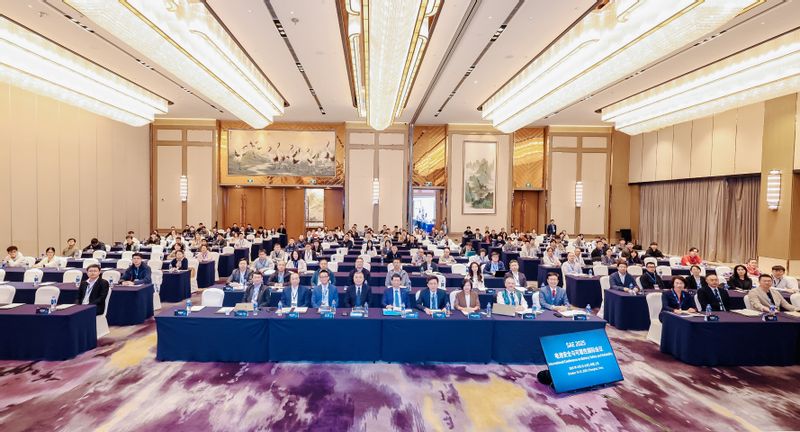
With the widespread application of new energy, particularly in electric vehicles, smart devices, and renewable energy storage, battery safety and reliability have become critical issues. From October 23 to 25, the SAE 2025 Battery Safety and Reliability International Conference was held in Shanghai. The conference was organized by East China University of Science and Technology (ECUST), co-organized by the Key Laboratory of Advanced Battery Systems and Safety for the Petroleum and Chemical Industry, and received academic support from SAE International. Centered on the theme "Battery Safety and Reliability Throughout the Lifecycle," nearly 500 experts, scholars, and engineers from universities, research institutions, and industry chain enterprises worldwide gathered to discuss cutting-edge topics such as safety design, risk prevention and control, standard coordination, and data-driven approaches. They shared the latest research findings and practical experiences, which not only enhanced China's international influence in the field of battery safety and reliability but also injected new momentum into building a safer, more reliable, and sustainable electrified future. President Xuan Fuzhen of ECUST attended the conference and delivered a speech, while Vice President Li Tao attended and addressed the opening ceremony. The opening ceremony was presided over by Professor Luan Weiling, Executive Chair of the conference and a faculty member of the School of Mechanical and Power Engineering.
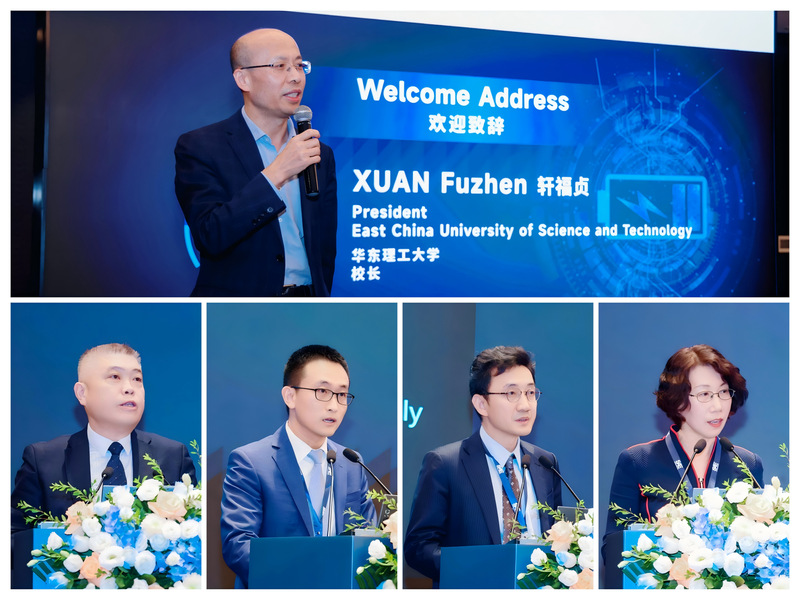
In his speech, President Xuan Fuzhen noted that battery safety and reliability are key issues in energy transition and transportation electrification, requiring interdisciplinary collaboration and industry-university-research integration to address systemic challenges. He stated that ECUST would continue to leverage its interdisciplinary strengths and focus on building innovative cooperation platforms, aiming to tackle both fundamental research bottlenecks and practical industrial needs, contributing greater wisdom and effort to technological innovation and standard development in battery safety and reliability. In his address, Vice President Li Tao expressed hope that the conference would serve as an opportunity for all parties to deepen collaboration on core battery safety and reliability issues, strengthen the alignment between fundamental research and industrial applications, and accelerate the translation of interdisciplinary achievements into practical solutions. Le Le, General Manager of SAE International China, emphasized that safety is the foundation of industrial development, noting that SAE is advancing the development of international standards, including traceability systems for the entire lifecycle of electric vehicle batteries. Zu Sijie, Vice President and Chief Engineer of SAIC Motor Corporation, stressed that "engineering is responsibility," advocating for safety management to be moved forward to the design stage and supported by "data evidence chains" to enable quantitative prevention in advance.
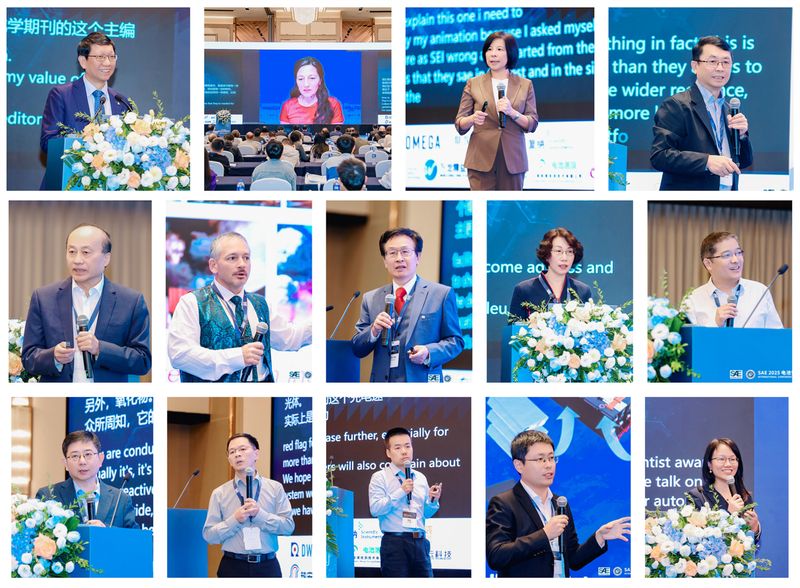
The conference's invited keynote speeches were moderated by Professor Tu Shandong, an academician of the Chinese Academy of Engineering and a faculty member at ECUST. Thirteen experts delivered keynote presentations, including Professor Anna G. Stefanopoulou from the University of Michigan, Professor Jennifer Wen, Fellow of the Royal Academy of Engineering, Professor Jerry Jinyue Yan, Fellow of the European Academy of Sciences and Arts, Professor Zhang Jiujun, Foreign Member of the Chinese Academy of Engineering, Brian Engle, Chairman of the SAE Battery Standards Committee, Jay Zhou, former Vice President of Ford Asia Pacific, Professor Luan Weiling from ECUST, Professor Ye Shuliang from China Jiliang University, Professor Xiangxin Guo from Qingdao University, Chen Xiaobo, Chief System Safety Engineer at Contemporary Amperex Technology Co., Limited (CATL), Wang Lin, Deputy General Manager of SAIC Qingtao Energy Technology Co., Ltd., Song Gan, Manager of the Advanced Technology Research and Development Department at BYD Auto Industry Co., Ltd., and Wang Fang, Chief Scientist at China Automotive Technology and Research Center Co., Ltd. The presentations covered topics such as thermal runaway mechanisms, safety design, intelligent manufacturing, testing and evaluation, failure analysis, and standards and regulations.
The conference reached three industry consensuses: promoting "preventive measures and early weak signal sensing" as industry standards; establishing a "traceable data system throughout the entire lifecycle" to quantitatively validate safety; and creating "interdisciplinary joint test platforms" to enhance the efficiency of industrial standard validation.
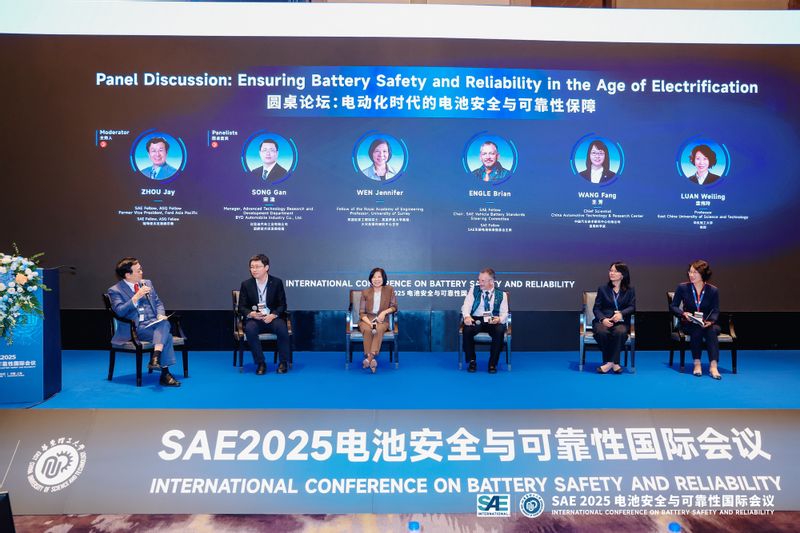
A roundtable forum, themed "Battery Safety and Reliability Assurance in the Electrification Era," was moderated by Dr. Jay Zhou. Participants discussed battery lifecycle risks, fault detection, and standard adaptation. The consensus was that current safety bottlenecks primarily stem from insufficient cross-stage risk identification and data transparency. It was suggested that multi-scale sensing combined with model fusion should be used to achieve early diagnosis and establish a "predictive safety management" system. Additionally, the industry needs to build shared validation platforms, using data to drive standards and standards to guide innovation, forming a safety closed loop spanning design, manufacturing, use, and recycling.
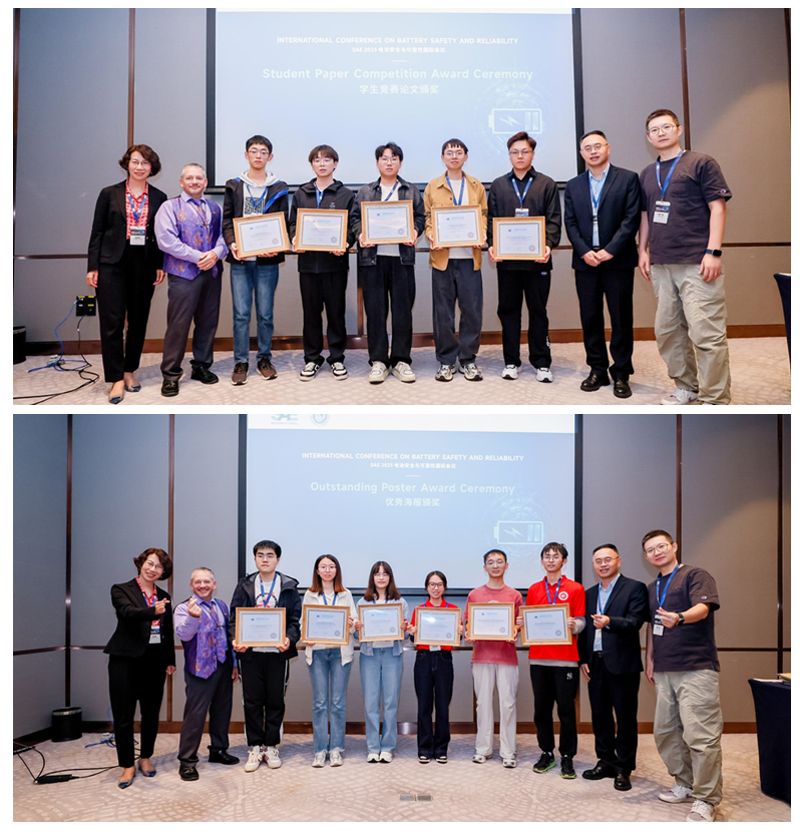
The conference featured five parallel technical sessions, where nearly 100 experts and young scholars delivered keynote and academic presentations covering areas such as battery safety management, risk assessment, materials and structural innovation, thermal runaway prevention, lifespan prediction, and reliability modeling. Concurrent events included an Outstanding Student Paper Competition and a Poster Paper Selection. The judging panel for these events included the conference's co-executive chairs—Brian Engle, Chairman of the SAE Battery Standards Committee; Professor Chen Haofeng from ECUST; and Associate Professor Han Guangsha from Tongji University. A total of 14 graduate students from universities including ECUST, Chongqing University, Xi'an Jiaotong University, Shanghai Jiao Tong University, and Beijing Institute of Technology received awards, showcasing the research potential and innovative vitality of young scholars.
The conference concluded with a consensus that research on battery safety and reliability must form an engineering closed loop "from models to standards, and from data to evidence." Leading industry players such as SAIC Group, CATL, BYD, and XCMG Group actively participated. The organizers plan to collaborate with international societies and industry partners to establish joint standard test platforms, accident mechanism databases, and open data platforms, laying the foundation for next-generation high-safety energy storage systems.

